
Daily maintenance methods for assembly lines and conveyor lines
Quantified, brand-neutral daily care for assembly & conveyor lines: embed risk level into takt time—high-risk devices monitored live, medium-risk lines serviced in planned 30-min post-shift slots, low-risk units data-triggered only. Operators use every 30-min process wait for three 2-min “fragment checks” scanned into MES; any deviation locks the machine and summons maintenance within 5 min. Post-shift 7-step routine covers clean, tension, lube, wear, torque, electrical test and digital log. Gearboxes change oil at 200 h, then every 2 000 h; chains scrap at 3 % pitch elongation, belts at 1 mm cover cracks. Rollers kept ≤ 70 °C, rails straight within 0.3 mm/m, belt wander < 5 % width. E-stop, overload and insulation tested daily to quarterly; environment held 5–40 °C, 40–70 % RH. Every ≥5-min stoppage is logged and top repeat failures auto-update next month’s checklist, sustaining ≤0.5 % sudden downtime.
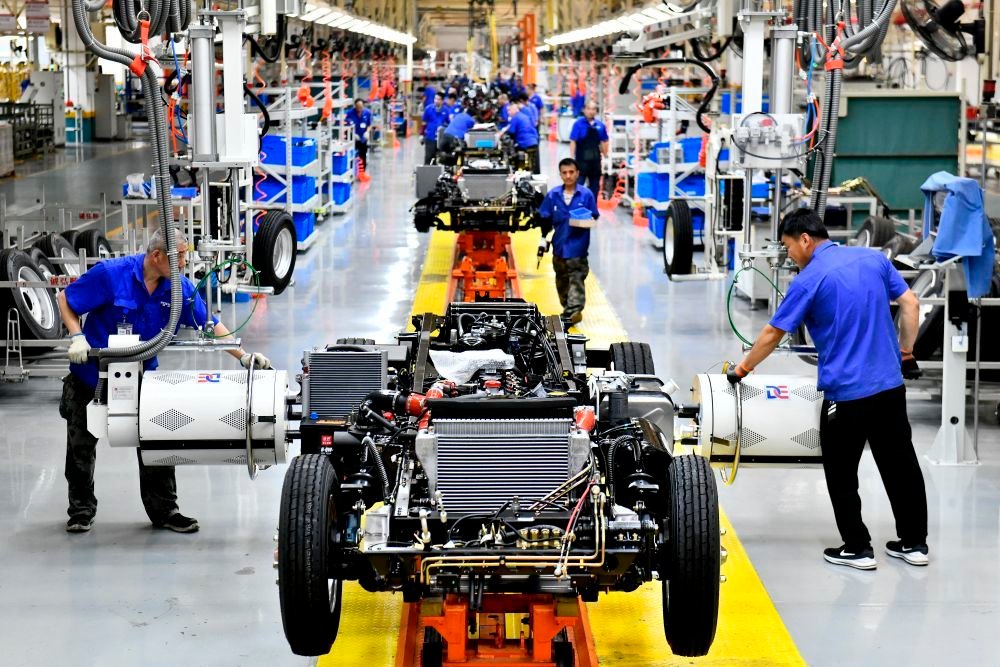
Daily Maintenance Manual for Assembly & Conveyor Lines
- Maintenance Rhythm: Embed “Risk Level” into the Takt Time
- HIGH-RISK (presses, robot guns, main gearboxes):
– Real-time temp, current, vibration into MES; auto alert on threshold.
– During 30-min change-over do “Critical-5”: oil level, chain sag, motor insulation, E-stop loop, guard switch. - MEDIUM-RISK (main body line, roller conveyor, lifter):
– 30 min after each shift do “Post-Shift 7-Step” (see §3).
– Pick one low-volume shift per week, stop 2 h for deep care (swap worn belt, clean rail, re-grease bearings). - LOW-RISK (AGV, tool slide, lamps):
– Data-triggered only: AGV battery < 15 % or path drift > 5 mm auto calls maint; rest checked monthly.
- “Fragment Check” – No Extra Downtime
Slice every 30-min waiting time into three 2-min slots; operator scans into MES:
① 0 min: belt wander ≤ 5 mm, chain sag ≤ 10 mm.
② 10 min: motor housing ΔT < 40 K, no oil leak.
③ 20 min: E-stop resets, guard magnet green.
Any fail → MES locks machine; maint arrives ≤ 5 min.
- Post-Shift 30-min “7-Step” (medium-risk lines)
1 CLEAN: blow/vac dust → alcohol wipe rail; no metal chips on chain.
2 TENSION: chain sag limit 10 mm; belt thumb-deflection 6 mm.
3 LUBE: brush lithium grease 1 mm on chain sides; bearing grease until purged.
4 WEAR: replace sprocket if tooth thickness wear > 5 % or step on tip.
5 TORQUE: M10 bolt 45 N·m; re-mark if paint line broken.
6 ELEC: 500 V megger ≥ 1 MΩ; no blackened terminals.
7 LOG: scan all into MES; auto-build “unit health file”.
- Gearbox “Three Changes – Two Nevers”
- First oil change at 200 h; flush with diesel; fill to sight glass centre.
- Routine change every 2 000 h or 12 months, whichever first.
- Change immediately if oil black, emulsified or iron powder > 150 ppm.
- Two Nevers: never water-wash motor; never clean gearbox interior with gasoline.
- Chain / Belt “Life Gauge”
- Chain: pitch elongation 3 % or pin wear 1 % → scrap whole length; no partial repair.
- Belt: cover crack depth > 1 mm or fabric showing → replace; splice step > 0.5 mm → re-splice.
- Timing belt: 0.3 mm root crack or tooth flake → discard.
- Roller Special (roller & belt conveyor)
- Temp: IR gun on bearing housing ≤ 70 °C; grease first, then check bearing.
- Noise: 3 min idle run; “click” = sprocket jump, “whine” = bearing starved.
- Alignment: rail straight 0.3 mm/m; roller parallel ≤ 0.5 mm; belt wander < 5 % of width.
- Wear: rubber lagging depth ≤ 2 mm or flat spot > 5 mm² → replace roller.
- Electrical “Three Tests – One Reset”
- Daily: press E-stop → main power off ≤ 1 s; normal restart after reset.
- Weekly: simulate 110 % overload → alarm & stop.
- Monthly: insulation ≥ 1 MΩ; VFD current ripple ≤ 10 % rated.
- Quarterly: contactor burn > 0.5 mm deep or 30 % area → replace; re-torque terminals.
- Environment Hard Rules
- 5–40 °C, 40–70 % RH; > 70 % RH add colour-change silica gel in cabinet; metal surfaces sprayed with rust preventative monthly.
- Dusty area: install dust curtain at inlet; auto air-knife every 2 h, 0.4–0.6 MPa.
- High-heat zone (> 60 °C): switch to silicone grease (drop point ≥ 300 °C), lube every 4 h; add forced fan on motor.
- Failure Closed-Loop
- Any stoppage ≥ 5 min: fill “failure card” within 30 min (time, point, symptom, root cause, countermeasure).
- Monthly TOP-3 repeat failures fed back into next month’s check-list; target “zero repeat”.
Take-away: Code risk level, fragment checks and the 7-step into your CMMS; execute to the numbers above and you will reach ≤ 0.5 % sudden-breakdown rate—on par with top-tier global vehicle plants.